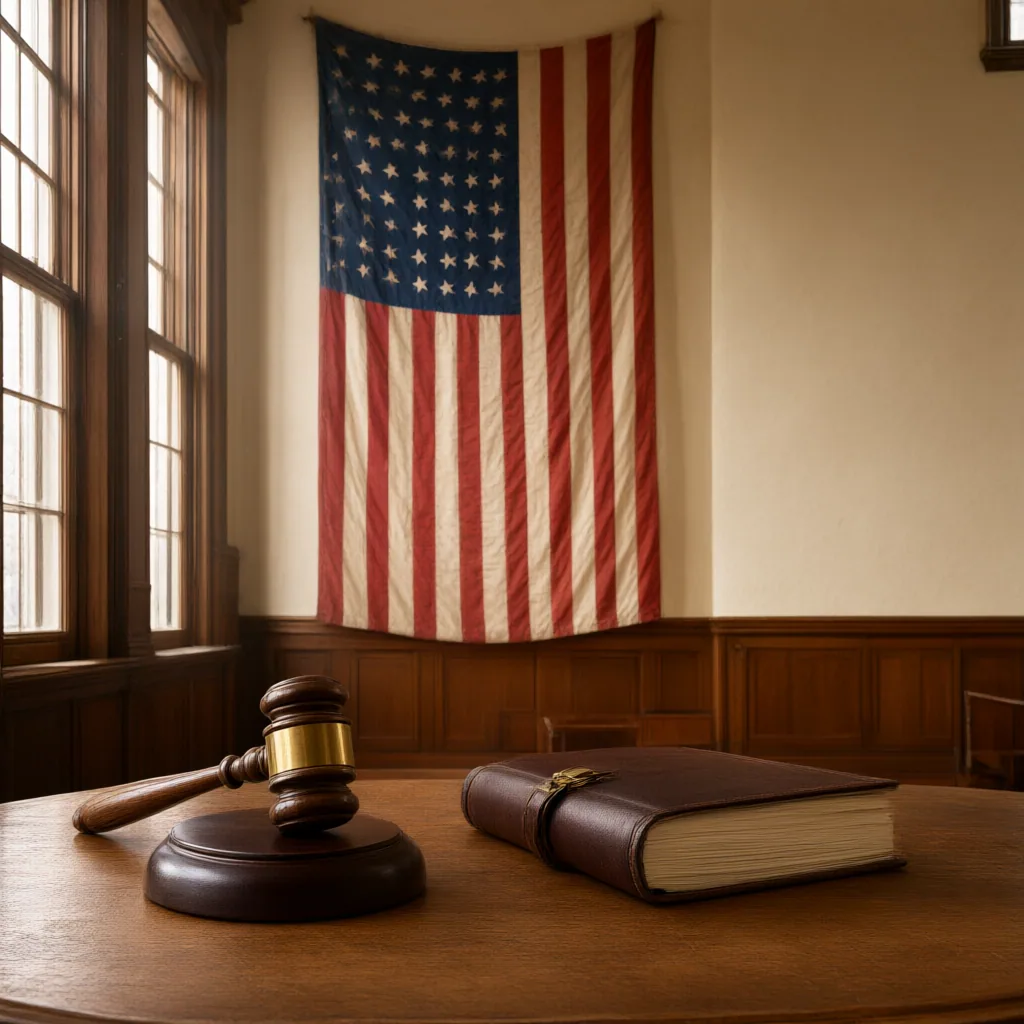
The Pledge of Allegiance sits at the intersection of patriotism, public ritual, and debate about national identity. For students, teachers, and general readers, it is most useful to approach the pledge as both a short civic statement and a document with a history: it was written for a particular moment, revised over time, and interpreted differently by generations of Americans.
How the pledge began
The modern discussion usually starts with Francis Bellamy, the writer most closely associated with the original text. The pledge emerged in the late nineteenth century, when schools and civic ceremonies were important settings for shaping shared ideas about citizenship. In that context, the words were meant to be spoken aloud, remembered easily, and used in group settings rather than private reflection.
That origin matters because it explains why the pledge feels formal and concise. It was designed for repetition. It also helps readers understand why questions about wording, posture, and public use have remained part of its history from the start.
Why the wording changed
Many readers know the pledge in a form that is not identical to its earliest version. Changes in wording reflected broader efforts to clarify loyalty, define the object of allegiance, and adapt the text to new political and cultural circumstances. The most discussed revision is the addition of the phrase “under God,” which became a lasting part of public argument about religion, tradition, and constitutional limits.
When people disagree about the pledge, they are often disagreeing about more than a single phrase. They may be debating the role of religion in public life, the meaning of dissent, or the difference between voluntary expression and social pressure. The pledge remains important because it condenses those larger questions into a few familiar lines.
Where Americans encounter it
The Pledge of Allegiance is most commonly associated with schools, public meetings, veterans’ events, and ceremonial occasions. In each setting, the meaning can shift slightly. In a classroom, it may be treated as part of civic routine. In a public assembly, it may function as an opening gesture of unity. In historical interpretation, it becomes evidence of how Americans have expressed belonging and argued over it.
For that reason, the pledge is not only a text to memorize. It is also a useful entry point into the study of civic language: how short phrases carry values, how rituals are taught, and how public habits change without disappearing.
Questions readers often bring to the topic
Some readers want a straightforward historical overview. Others arrive with questions about whether participation can be required, why the text changed, or how the pledge has been viewed in different eras. A careful guide should keep those questions distinct. Historical origin, legal controversy, and present-day practice are related, but they are not the same subject.
That distinction helps avoid oversimplifying the pledge into either a sacred symbol or a mere political slogan. Its long life in American culture comes from the fact that it has been both ordinary and contested: recited routinely, yet repeatedly examined for what it asks of citizens.
Reading the pledge in context
The best way to understand the Pledge of Allegiance is to place it beside the history of public education, patriotic ceremony, and constitutional debate. Readers who do that can see why a brief civic text continues to attract strong opinions. It is not only about the words themselves, but about who speaks them, when they are spoken, and what a democratic society expects from shared public rituals.