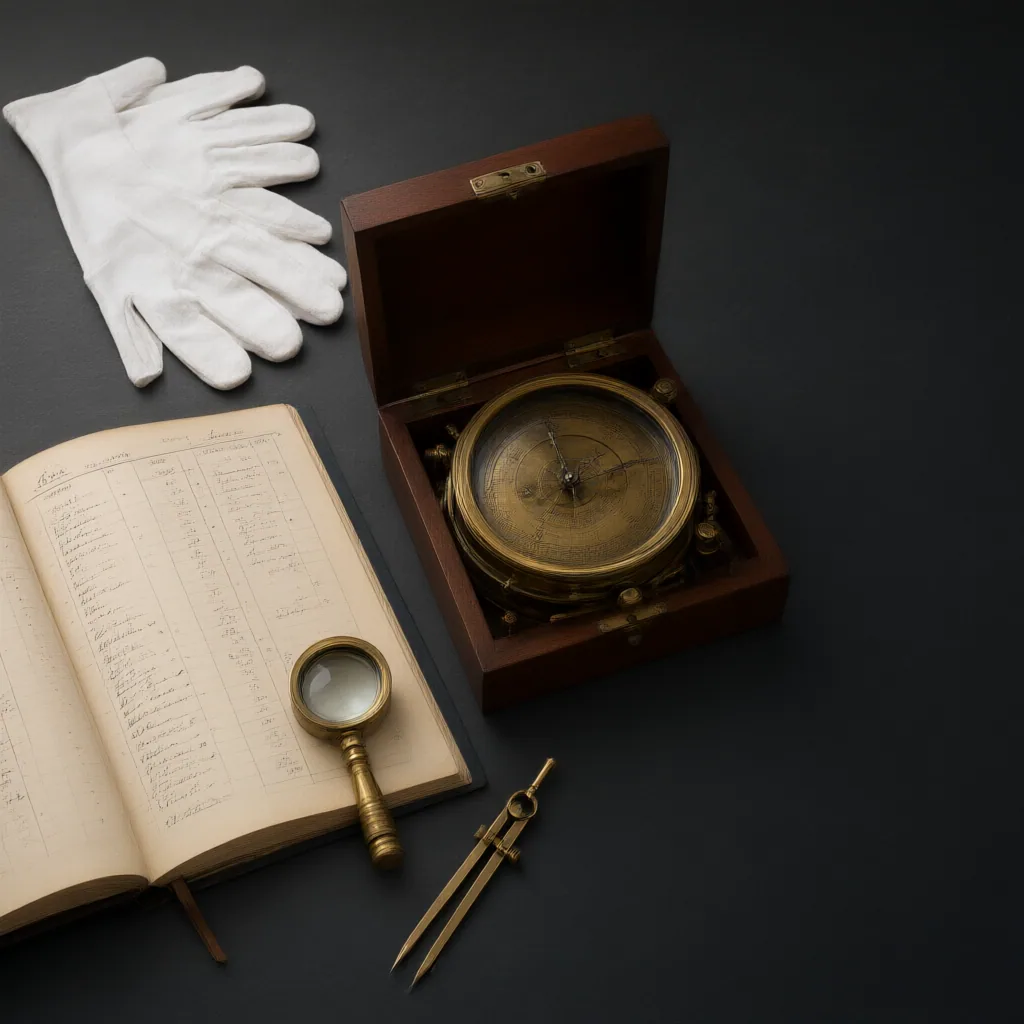
Collectors, students, and independent researchers often need more than a headline result. A useful sale record helps you understand what was offered, how it was described at the time, and what kind of evidence supports that description. This page brings together documented object and sale results in a format meant for careful reading, with attention to the difference between a recorded fact and a later assumption.
What a documented result can tell you
A sale result is most valuable when it preserves the object description, the context of the offering, and the terms used to identify the piece. Even when a record is brief, it can still help readers trace how an object was presented in the market and how collectors or researchers may have understood it at that moment. That matters for material culture studies, because labels, categories, and condition notes often shape the later story attached to an item.
For that reason, documented results should not be treated as automatic proof of origin, date, or ownership history. A recorded sale can show that an object was offered and described in a particular way, but it does not by itself settle every question about authenticity, provenance, or significance. Reading these records carefully allows visitors to separate the auction-room claim from the evidence that can actually be confirmed.
Reading object descriptions with care
Object listings tend to compress a great deal of information into a small space. Names, materials, measurements, regional attributions, and condition remarks may all appear together, sometimes without much explanation. When reviewing sale results, it helps to look first at the plain description: what the object is said to be, what it appears to be made from, and which identifying features are clearly stated.
The next step is context. Ask whether the description reflects direct observation, catalog tradition, or market language designed to place the object within a known collecting category. A well-documented result is useful because it gives readers something concrete to compare across other records, museum entries, family papers, trade catalogs, or published reference works.
Why sale records matter to historical research
Documented sale results are not only for buyers and sellers. They are also part of the paper trail that helps historians follow the circulation of objects over time. A result can reveal which forms of material culture were actively collected, how categories changed, and which details were considered important enough to preserve in the record.
This is especially helpful when studying objects that move between private collections, regional markets, and public memory. A sale entry may provide the most accessible surviving description of an item, even when fuller supporting records are scattered or unavailable. Used alongside other sources, these results can help readers reconstruct collecting patterns without overstating what the record proves.
Using this page as a reference point
The purpose of this page is to support comparison, not speculation. Readers can use documented results here to note recurring object types, compare descriptive language, and identify questions worth pursuing in deeper research. Where evidence is limited, the responsible approach is to keep conclusions measured and let the surviving record speak for itself.
That approach makes the page useful across several audiences. General readers gain a clearer view of how historical objects are presented in the market. Students can learn how to read sale documentation critically. Researchers and collectors can use the material as a starting point for verification, cross-referencing, and further archival work.
Careful documentation does not remove every uncertainty, but it does create a more reliable foundation for understanding objects in circulation. In that sense, sale results are more than market summaries: they are compact historical records that reward close attention.