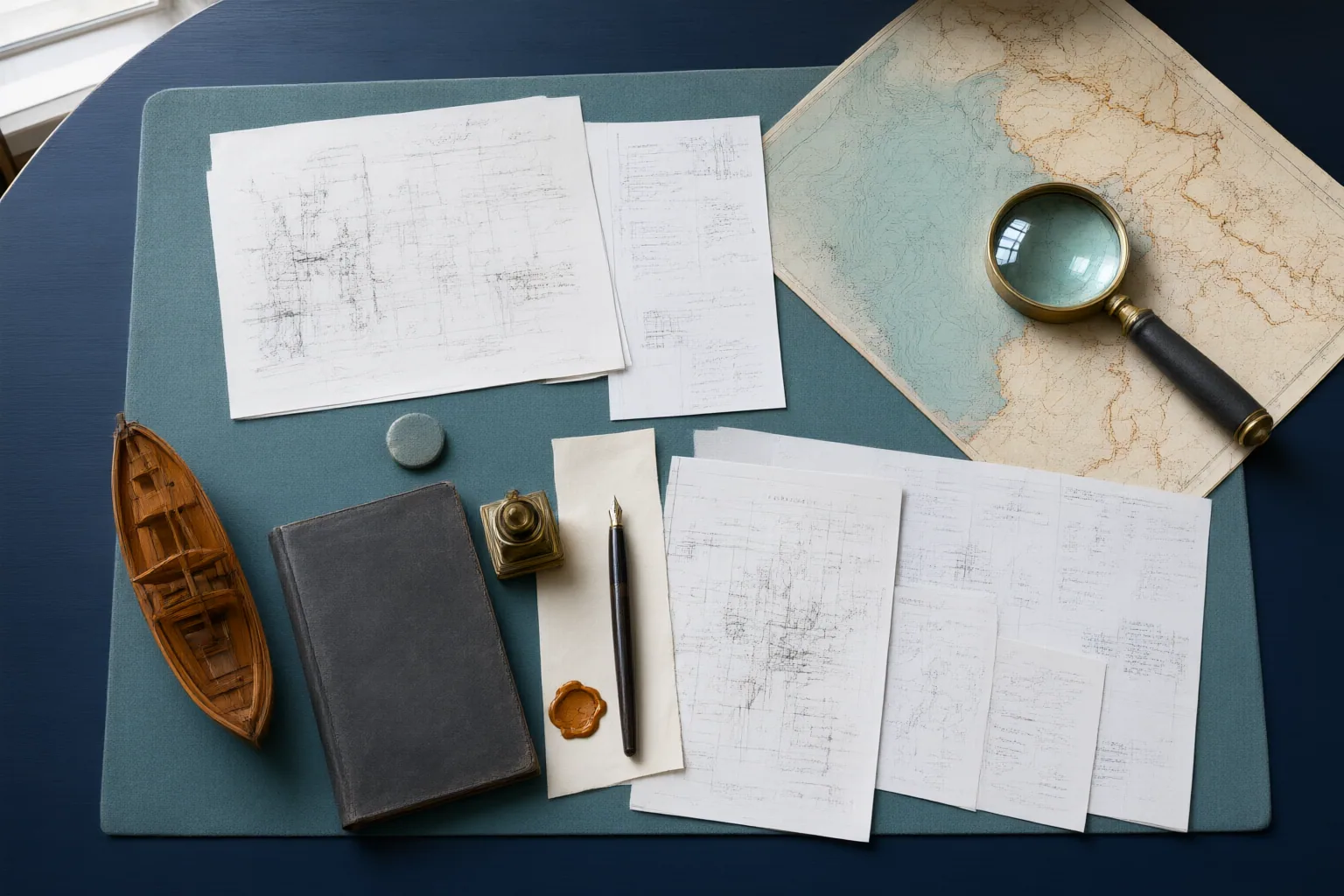
A shared vessel name is only a starting point. To determine whether nineteenth-century American records describe one vessel or several, compare the home port, date, trade, identifiers, jurisdiction, and document trail while allowing for missing or dispersed archival records.
Why a Vessel Name Is Not Enough
Vessel names were not necessarily unique. The same name may appear in different ports or periods, so matching names do not by themselves establish that two records concern the same ship. For the New England holdings described by the National Archives, home port and approximate period are critical clues.
Treat each appearance of a name as a separate candidate until other evidence connects it to the same vessel. This cautious approach helps prevent unrelated voyages, owners, crews, or transactions from being combined into a single history. The National Archives guidance applies specifically to the holdings it describes and should not be taken as proof that every American port has an identical surviving record structure.

Start with Home Port, Date, and Type of Trade
Begin by recording the date or approximate period attached to every reference. Then note the vessel’s stated home port. A name found at different ports or in substantially different periods may represent separate vessels, although the name alone cannot settle the question.
Next, record whether each source associates the vessel with coastal trade, fishing, or foreign trade. The National Archives describes trade as a useful but less critical clue than home port and period. Use it to strengthen or weaken a proposed match, not as a standalone identifier.
A practical sequence is:
- Group references by approximate date.
- Compare the home ports within each group.
- Add the reported type of trade.
- Keep conflicting profiles separate until additional documentation resolves them.
This narrowing process is especially important because the cited National Archives holdings have no single master index covering all vessel information.
Compare Identifiers and Documentation Across Records
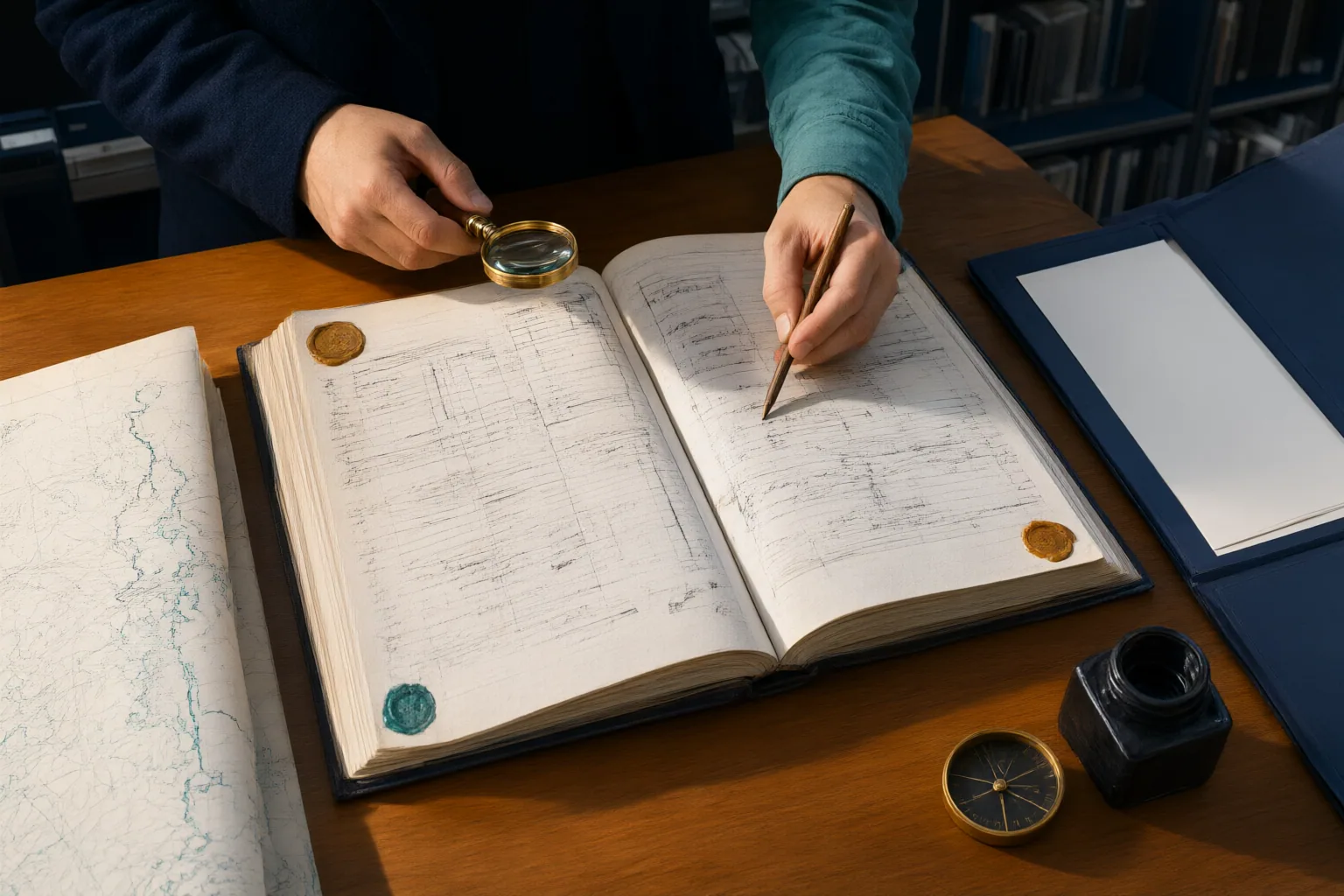
Build a comparison sheet with one row for every record and columns for the vessel name, date, home port, trade, jurisdiction, identifiers, and document type. General naming and registration guidance supports comparing official or registration numbers, call signs, jurisdiction, and home port when they are available. These secondary sources provide a broad identification method; they do not establish which identifiers governed a particular nineteenth-century vessel.
The National Archives lists many kinds of vessel documentation, including registries, licenses and enrollments, oaths and bonds, tonnage measurements, mortgages and sales, and crew lists. Comparing details across several document types can reveal whether records form a consistent profile. For example, compatible dates, the same home port, and linked documentation provide a stronger basis for a match than the name alone.
Record contradictions as carefully as agreements. Do not force entries into one identity merely because most fields are blank. If numbering systems or jurisdictions differ, preserve those distinctions and investigate how each source identifies its vessel.
Conclusion
A defensible identification rests on a combination of period, home port, trade, available identifiers, jurisdiction, and connected documents—not on a shared name. Even a careful search may remain inconclusive: the National Archives cautions that some vessel records were deposited elsewhere or lost through fires, floods, and early storage conditions.
Create a comparison sheet for every same-named candidate. Enter its dates, home port, trade, identifiers, and document types, mark conflicts and gaps, and use the resulting profile to choose your next archival search.
Disclosures and limitations
- This article was prepared with AI assistance from the supplied National Archives guidance and secondary-source research. Claims are limited to those materials, and the modern secondary sources are used only for general identification methods.
Related reading
Sources
- Can Two Boats Share the Same Name? A Practical Guide for Boaters and Registries – The Legal Guide — thelegalguide.org
- Can Two Separate Boats Share the Same Name in the United States – Bridge Legal — bridgelegal.org
- Search Strategies for Ships — National Archives
- Can Two Separate Boats Have the Same Name – Law Wise Lab — lawwiselab.org