
Reconcile conflicting historical records by preserving every variant, evaluating how and why each record was created, tracing whether repeated claims are independent, and stating conclusions with confidence proportional to the available evidence.
Why Historical Records Disagree
Disagreement does not necessarily mean that one entire record is unreliable. An informant may have misremembered or guessed, while a clerk or later transcriber may have misread handwriting, reversed numbers, or copied an earlier mistake. Names, residences, birthplaces, and legal categories can also change as a person’s identity or circumstances change. Institutions create records for different purposes, so the information they collect may differ in precision and relevance.
Repeated details require particular care. Several records may appear to corroborate a date or place while actually deriving from the same earlier entry. Before treating repetition as confirmation, consider whether the records represent independent information or a shared chain of copying.
Evaluate Each Record in Context
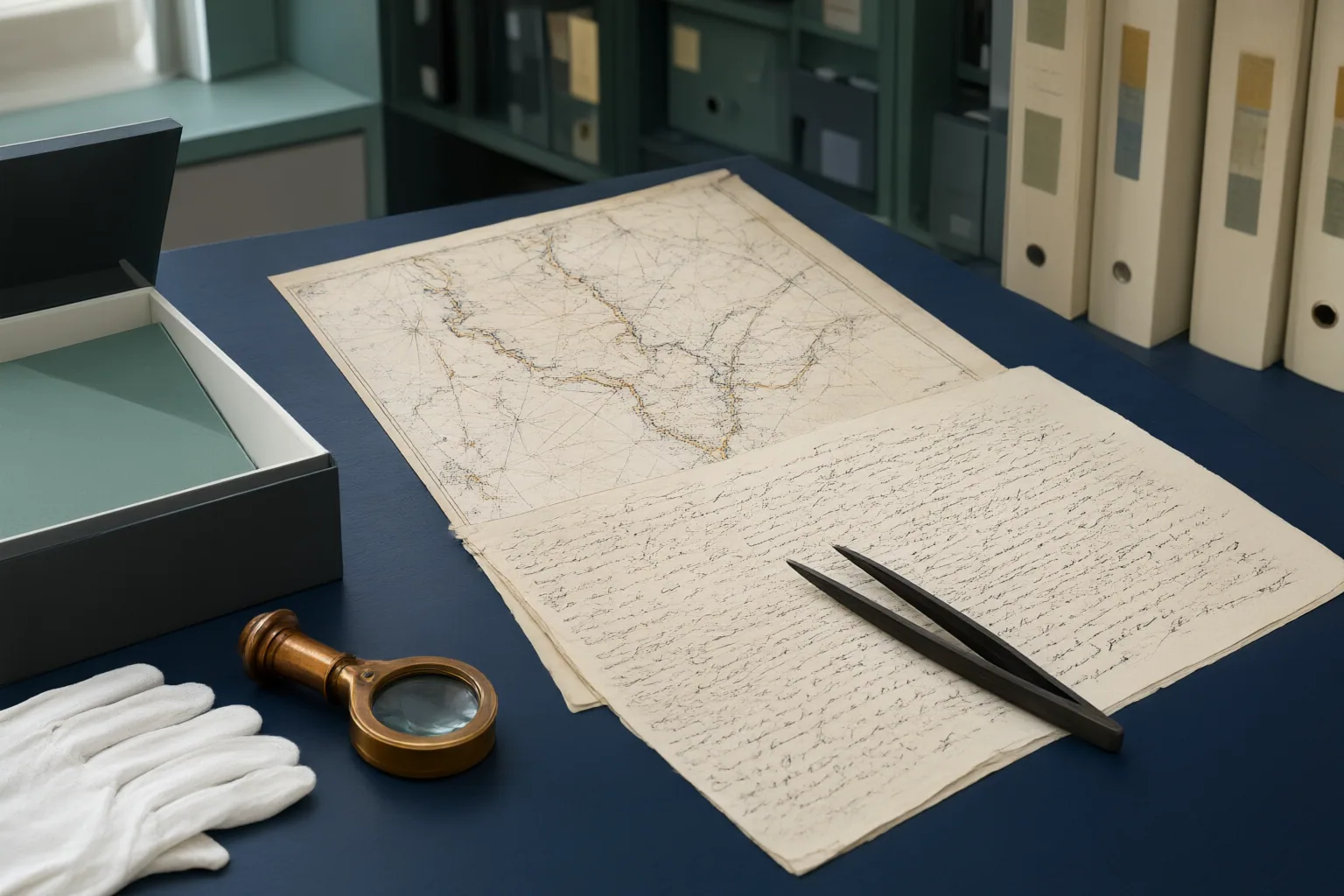
Compare each record using the same questions. How close to the event was it created? Did the informant have direct knowledge, or was the information remembered, inferred, or supplied by someone else? Could incentives or pressures have influenced the answer? Is the record original, or is it a derivative copy or transcription?
These factors matter more than an appearance of authority. An official document should not automatically outweigh another source if it was created long after the event or relied on a poorly informed person. Likewise, an early record is not automatically decisive if the relevant detail was outside the informant’s knowledge.
Examine plausible error mechanisms as well. A single altered letter may reflect handwriting or transcription, while reversed digits may indicate number transposition. For every repeated claim, ask whether it arose independently. Then weigh the records together in their historical and administrative contexts instead of simply counting how many contain each version.

Preserve Variants and Document Your Reasoning
Keep the exact spelling, date, or place stated in each original record rather than silently standardizing inconvenient differences. Link every variant to its citation. When different names may identify the same person, record additional identifying details that support the connection instead of relying on name similarity alone.
A comparison table can make the evidence easier to inspect. Give each record its own entry and note the reported detail, citation, date of creation, likely informant, proximity to the event, and whether it is original or derivative. Research notes, logs, and software comment fields can serve the same purpose.
Finish the record of your analysis by explaining why one interpretation currently carries more weight. Retaining rejected or unresolved variants is essential: it allows another reader—or your future self—to reconstruct the decision, test its assumptions, and revise it if new evidence appears.
Conclusion
A defensible conclusion should be no stronger than its supporting evidence. When the balance is persuasive but incomplete, describe the preferred interpretation as probable rather than certain. If the conflict cannot be resolved, preserve the disagreement and document the competing hypotheses instead of forcing a definitive answer.
Choose one unresolved conflict in your research and create a cited comparison table. Assess every source’s proximity to the event and the informant’s knowledge, then record whether your conclusion is certain, probable, or still open—and why.
Disclosures and limitations
- This article was prepared with AI assistance from the supplied research package. Its factual guidance is based on the cited PA Ancestors and Genealogy Foundation source materials.
Related reading
Sources
- Best Practices to Resolve Name and Date Conflicts in Genealogy Research — PA Ancestors
- How Historians Deal with Conflicting Historical Evidence – Genealogy Foundation — Genealogy Foundation