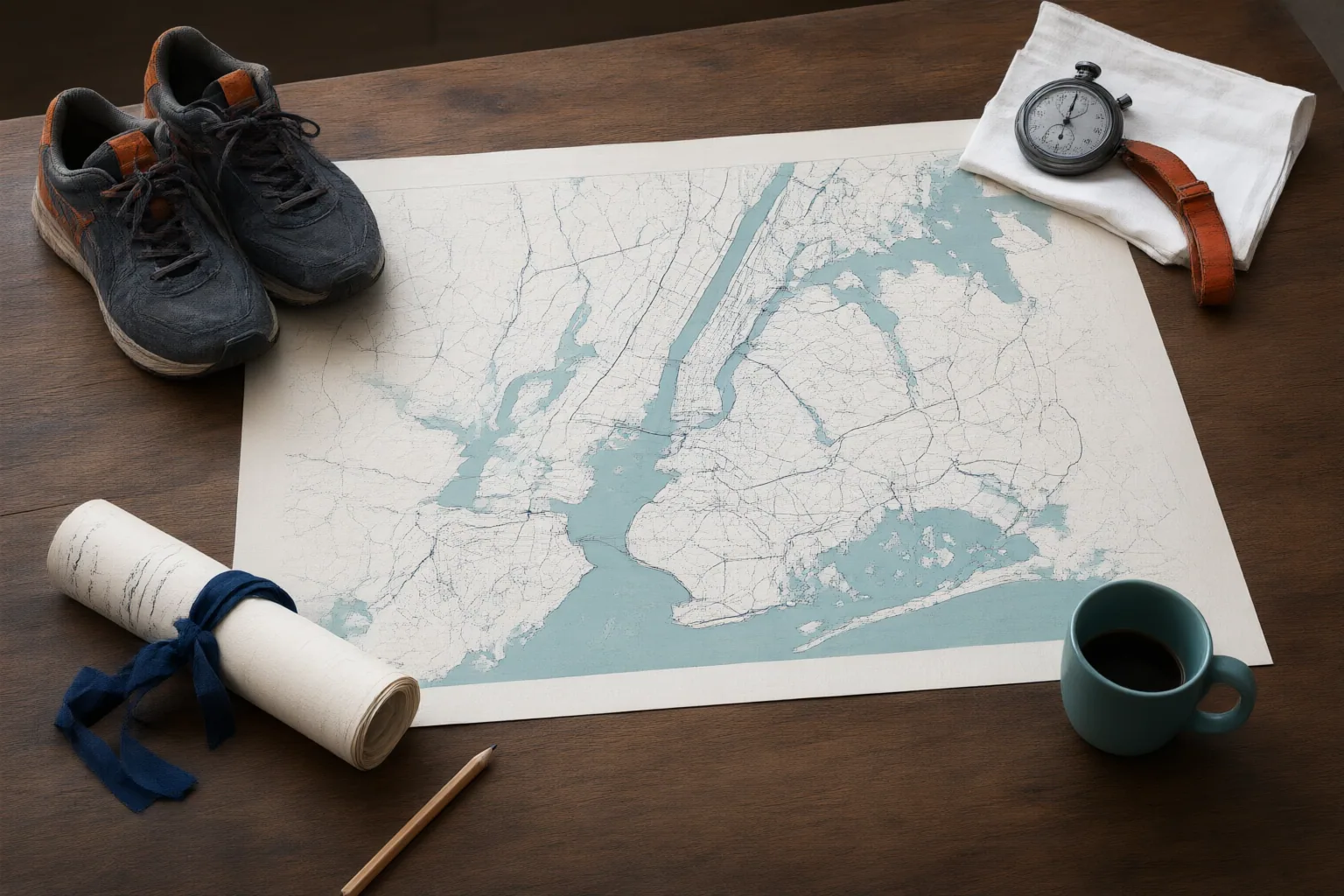
The New York City Marathon grew from a small Central Park race into a recurring event that crosses all five boroughs. Its history, geography, participation pathways, and responses to public crises provide an evidence-based foundation for interpreting it as a civic tradition, although that description remains an interpretation rather than a definition established by the cited sources.
From Central Park Loops to a Five-Borough Tradition
The first New York City Marathon took place in 1970 on a course made up of repeated loops in Central Park. Of 127 competitors who started, 55 finished. A decisive change came during the 1976 U.S. bicentennial, when organizers redesigned the course to travel through all five boroughs. Although conceived as a one-time arrangement, that broader course became the annual model.
This transition supplies the clearest historical basis for placing the marathon within New York’s civic history. The race changed from an event confined to one park into a recurring occasion organized around the geography of the wider city. Its public meaning cannot be inferred from geography alone, but the expansion established a durable citywide framework for the tradition.
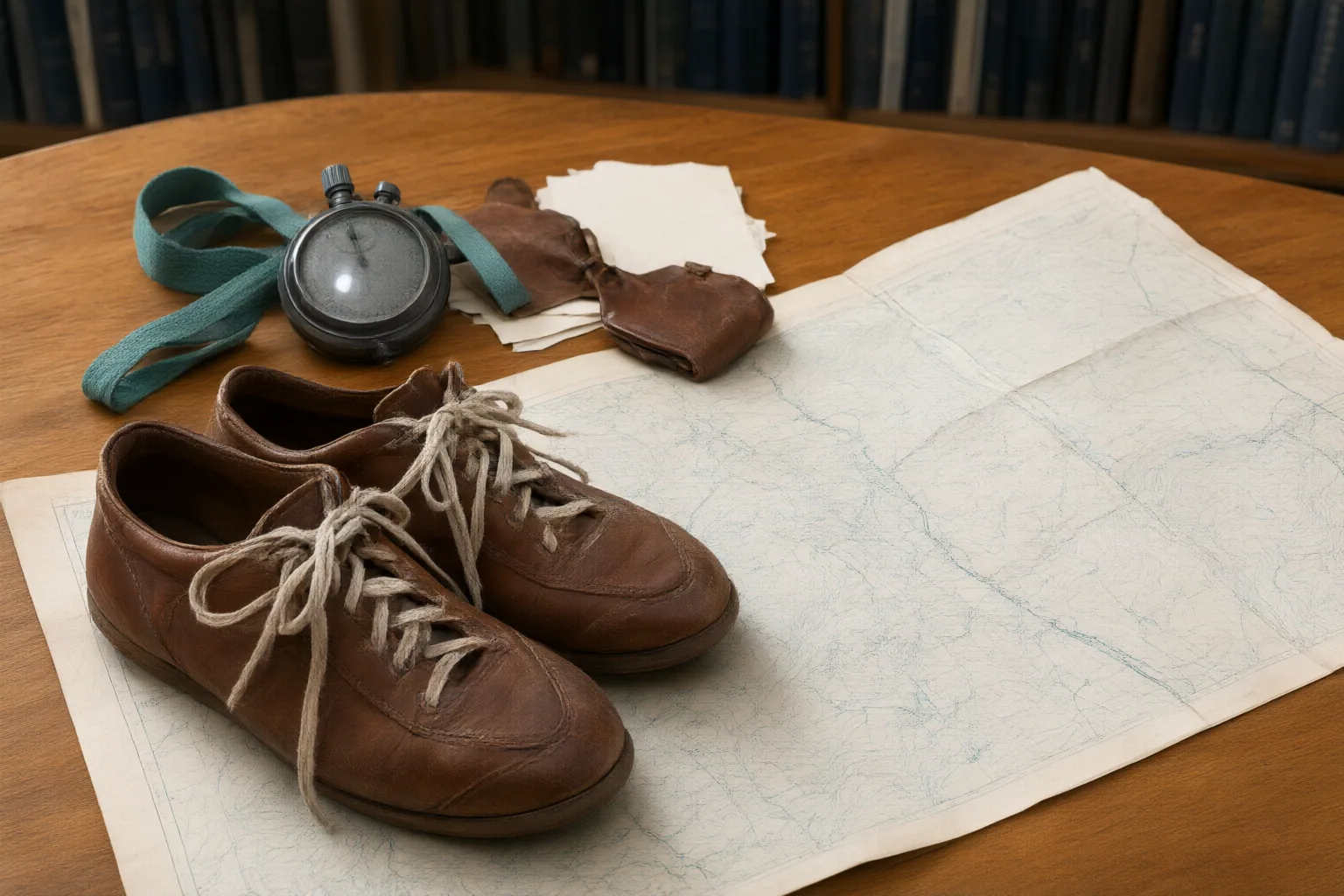
How the Route Turns the City Into the Event
The modern course begins on Staten Island, continues through Brooklyn, Queens, the Bronx, and Manhattan, and ends in Central Park. By connecting the five boroughs within a single route, the marathon gives its citywide character a physical form rather than treating “New York City” merely as a name or backdrop.
New York Road Runners organizes the race, which is generally held on the first Sunday in November. That recurring schedule joins a recognizable route to a regular place on the calendar. Together, these documented features create a public event with a broad urban footprint. They do not prove that every neighborhood or resident experiences the race in the same way, and the supplied sources contain no testimony supporting such a claim. The evidence instead shows how the course repeatedly links distinct parts of the city through one organized event.
Participation, Scale, and the Meaning of Civic Ritual
The marathon includes elite competition, but entry is not limited to elite runners. Documented pathways include a lottery, qualifying standards, charity fundraising, and New York Road Runners’ 9+1 program. That program combines participation in nine sponsored races with volunteering at another event, placing service as well as running within the event’s wider structure.
The scale is also substantial. Runner’s World reported that the 2025 race had 59,226 finishers from 132 countries and described it as the largest marathon to that date for the second consecutive year. These figures document size and international participation; they do not establish what the event means personally to participants or residents.
Calling the marathon a civic ritual is therefore a reasoned interpretation. Its annual recurrence, five-borough route, large field, and pathways through running, fundraising, and volunteering support that reading, while the sources themselves do not prescribe a single definition of civic ritual.
Conclusion
The marathon’s civic history includes contest and interruption as well as growth. At the 1972 race, women runners challenged unequal starting rules by sitting down for ten minutes before beginning with the men; the required ten-minute separation was dropped later that year. The event was also canceled after Hurricane Sandy in 2012 and during the COVID-19 pandemic in 2020.
These episodes complicate any picture of an unbroken or uncontested tradition. Alongside the annual schedule, five-borough geography, and varied participation routes, they show an institution shaped by changing public conditions. To examine that history directly, trace the course from Staten Island to Central Park and consult the cited sources on its development, participation pathways, and responses to crisis.
Disclosures and limitations
- This article was prepared with AI assistance from the supplied research package. Historical details, route information, participation figures, and interpretive boundaries are attributed to its listed sources; consequential claims should be checked against primary New York Road Runners or municipal records before publication.
Related reading
Sources
- New York City Marathon – Wikipedia — en.wikipedia.org
- FRONTLINE/WORLD . Stories by Date | PBS — pbs.org
- The Amazing Stats from the 2025 NYC Marathon—the Largest Marathon in History — Runner's World
- TCS New York City Marathon | New York NY — facebook.com
- New York maraton 5.11.2023 | USA | Amerika | Maraton Travel — maratontravel.cz
- TCS New York City Marathon 2027 — Sports Tours International
- 🏃 Newyorský maraton 2027 – Informace o závodu a registrační proces | Finishers — Finishers
- Bed & Breakfasts in New York (NY), United States | 83 Options… — agoda.com
- Commemoration of the American Civil War – Wikipedia — en.wikipedia.org
- List of historical societies in New York (state) – Wikipedia) — en.wikipedia.org