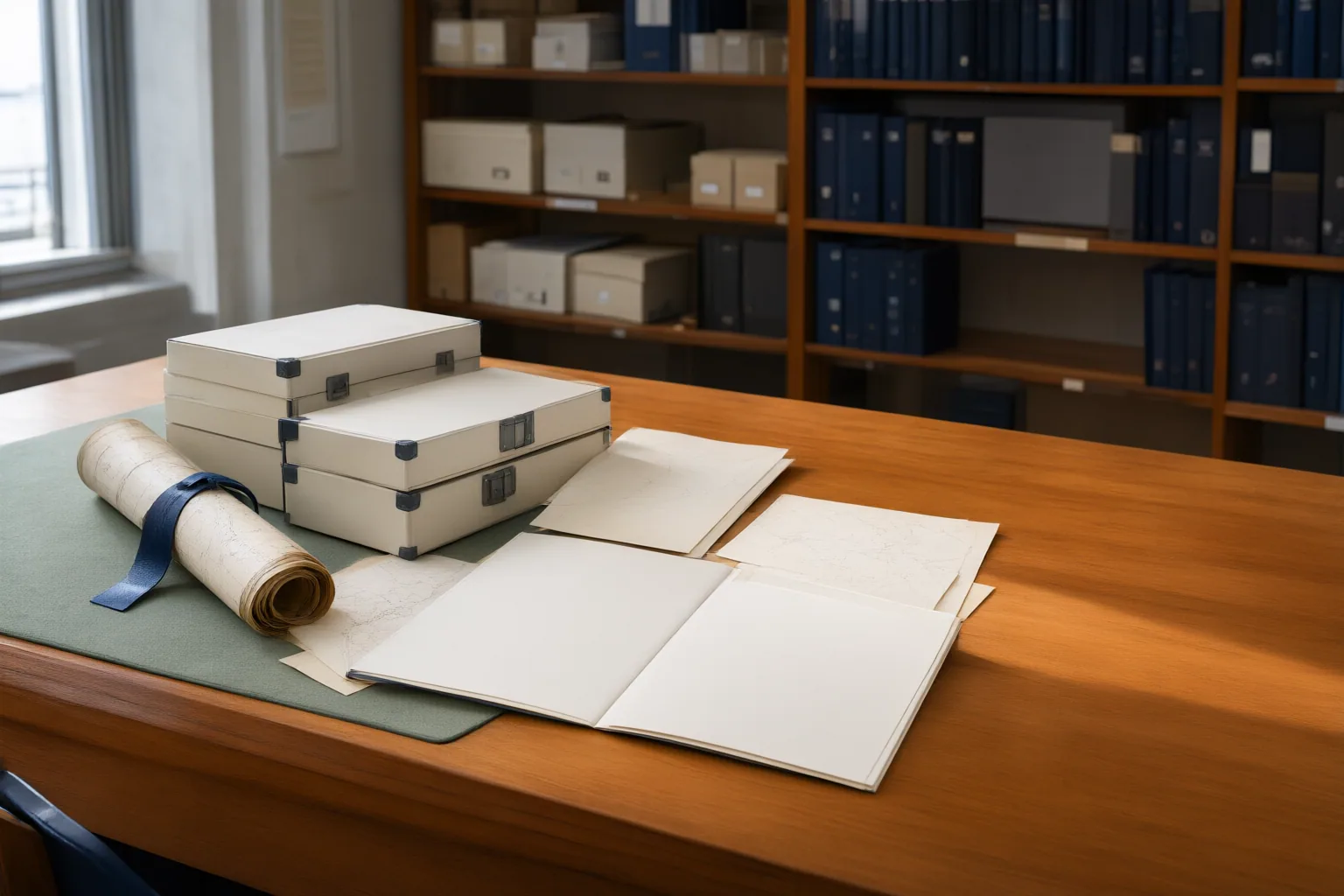
Archival finding aids help researchers identify promising collections, understand how records are organized, check access conditions, and prepare precise requests before visiting a repository or ordering copies.
What an Archival Finding Aid Tells You
A finding aid describes the contents and intellectual context of a particular archival collection. Start with the collection title, creator, date range, call number, size, language, and repository. Then read the historical note and scope-and-content statement to determine why the records were created and whether they address your question.
Arrangement information and container lists show how the collection is divided into series, boxes, and folders. This structure can make a relevant item easier to locate within a large collection. Also review access conditions and preferred citation instructions. A finding aid guides discovery, but it is not itself a primary or secondary source; cite the archival materials you actually consult.
How to Search Across Repositories and Record Groups
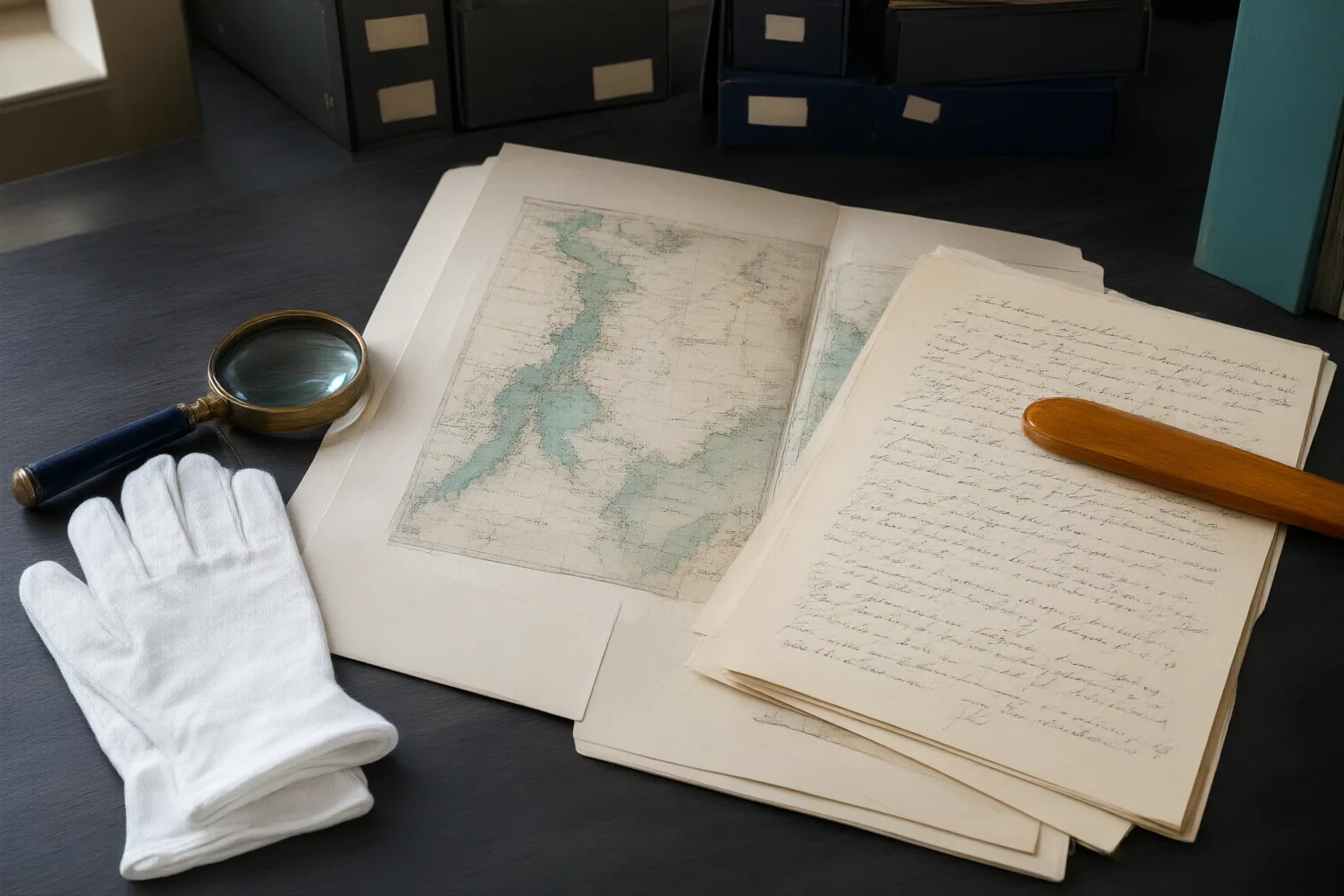
Begin with terms tied to the research question: people, organizations, government agencies, events, places, or subjects. Search broad guides first, then narrow the inquiry through repository catalogs and collection-level finding aids. NARA subject guides can identify records about one topic across multiple federal agencies, while some NARA facilities organize finding aids by federal record group and provide additional general or subject-specific guides.
Repository databases may offer different levels of detail. The Science History Institute, for example, permits searches by keyword, person, or organization, and a result may represent either a complete collection or a single folder. Follow useful results into their collection descriptions and folder listings, recording alternative names and related organizations that could support another search.
From a Promising Description to a Records Request
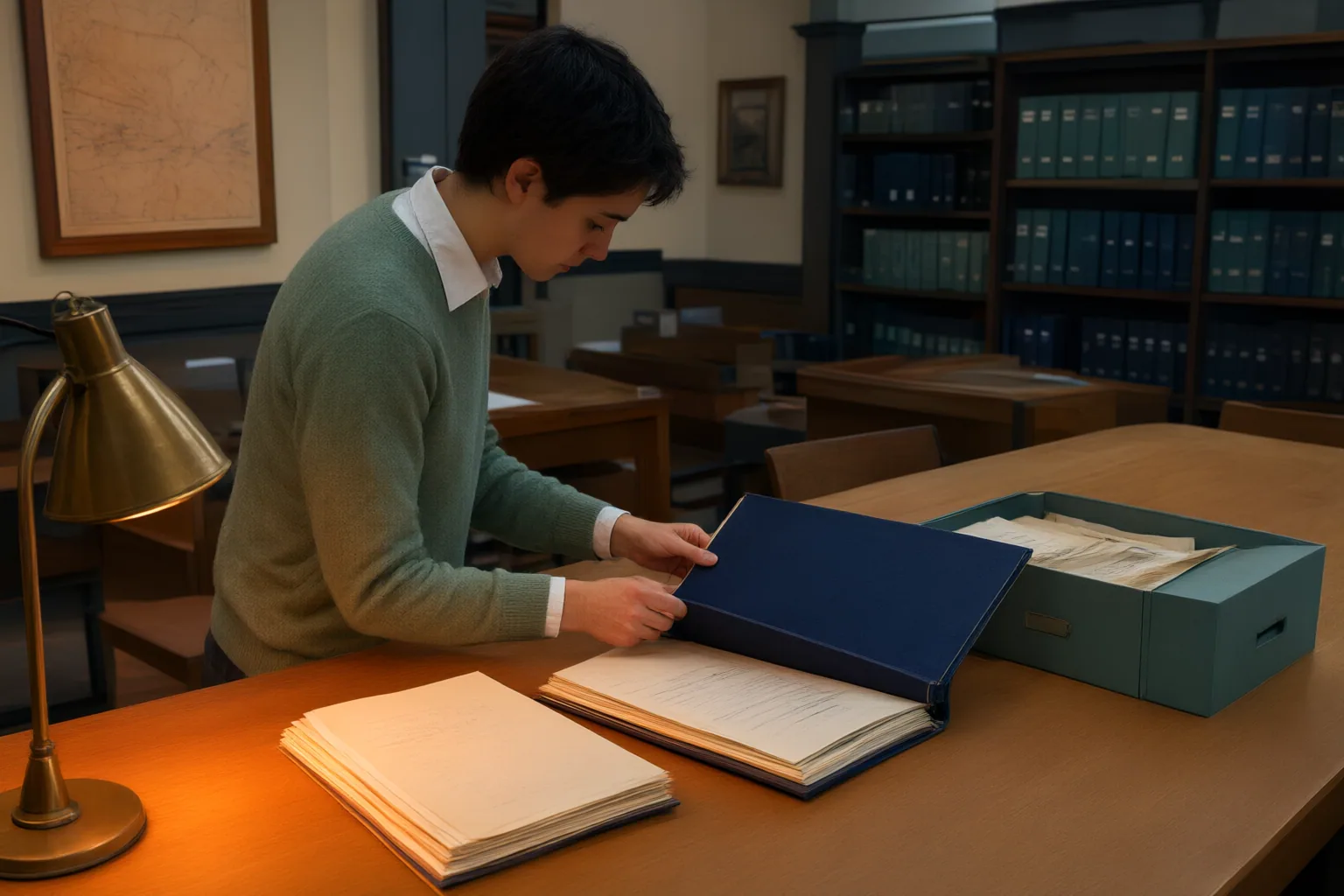
Once a description appears relevant, record the collection name, repository, call number, series, box number, and folder number whenever those details are available. Check the finding aid for access restrictions, including possible privacy or donor conditions, as well as instructions for requesting materials and citing them.
Use the recorded identifiers when contacting archives staff. Stevens Library advises researchers to use inventories, descriptions, and historical context to assess relevance and request specific materials. The Science History Institute asks copy requesters to provide collection names plus box and folder numbers; it may supply copies but does not digitize entire collections. If terminology, arrangement, or access information is unclear, consult a glossary or ask reference staff. Discovery does not guarantee immediate access, so a reading-room appointment or copy request may still be required.
Conclusion
Treat archival discovery as an iterative process: search broadly, inspect collection context, follow the arrangement into boxes and folders, and preserve the identifiers needed for access. Online results may be incomplete. Cornell notes that its finding-aid browse lists do not comprehensively represent its holdings and that its catalog cannot search container lists, even when catalog records link to full guides. Other repositories may also have descriptions that are not online.
Choose a relevant repository, examine its finding aids and broader subject guides, record precise collection and box or folder details, and contact reference staff about missing descriptions, restrictions, copies, or reading-room access.
Disclosures and limitations
- This article was prepared with AI assistance using only the supplied research package and its identified repository sources; no products were tested or recommended.
Related reading
Sources
- What are Finding Aids? :: La Crosse History — lacrossehistory.org
- Guides and Finding Aids — National Archives
- Archival research – Wikipedia — en.wikipedia.org
- Science History Institute — archives.sciencehistory.org
- Stevens Library: Archives & Special Collections: Finding Aids — library.stevens.edu
- Archival Finding Aids – Historic Trappe — Historic Trappe – Historical Society | Center for Pennsylvania German Studies | House Museums
- Archival Guides – Rare and Manuscript Collections — rare.library.cornell.edu
- Finding Your Voice: Crafting Compelling Finding Aids – Practical Technology For Archives — Practical Technology For Archives –
- Finding Aids — National Archives