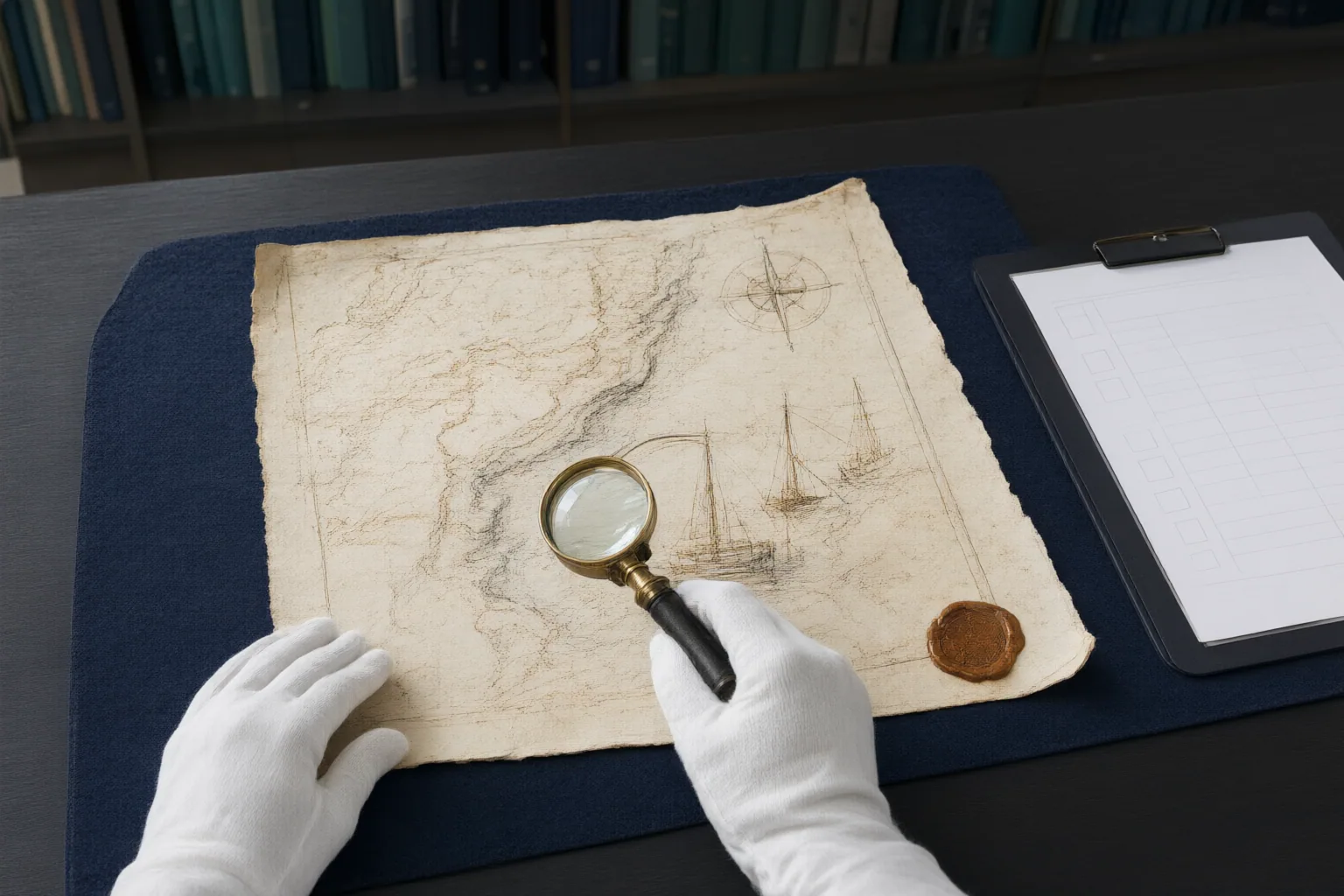
Before buying an antique document, look for a dated, authorized condition report that combines a close written examination with clear images, records changes and treatment, identifies active risks, and explains future care requirements. These details inform an acquisition decision, although the supplied sources do not establish their monetary effects on antique documents.
Start With the Report’s Date, Authority, and Visual Record
Begin by checking when the report was prepared, who authorized it, and the purpose it was intended to serve. A condition report records an object’s physical state at a particular time, so this context is essential when using it as a pre-purchase baseline.
The written assessment should be supported by photographs or illustrations that clearly correspond to the object and the conditions described. Together, the text and images can help distinguish damage already present from deterioration discovered later. If either part is vague or missing, request clarification rather than assuming that an unmentioned area is sound.
The supporting sources discuss artworks and paintings, not antique documents specifically. Their reporting principles are useful for evaluating documentation quality, but they do not provide document-specific grading standards or valuation rules.
Look for Damage, Continuing Risks, and Treatment History
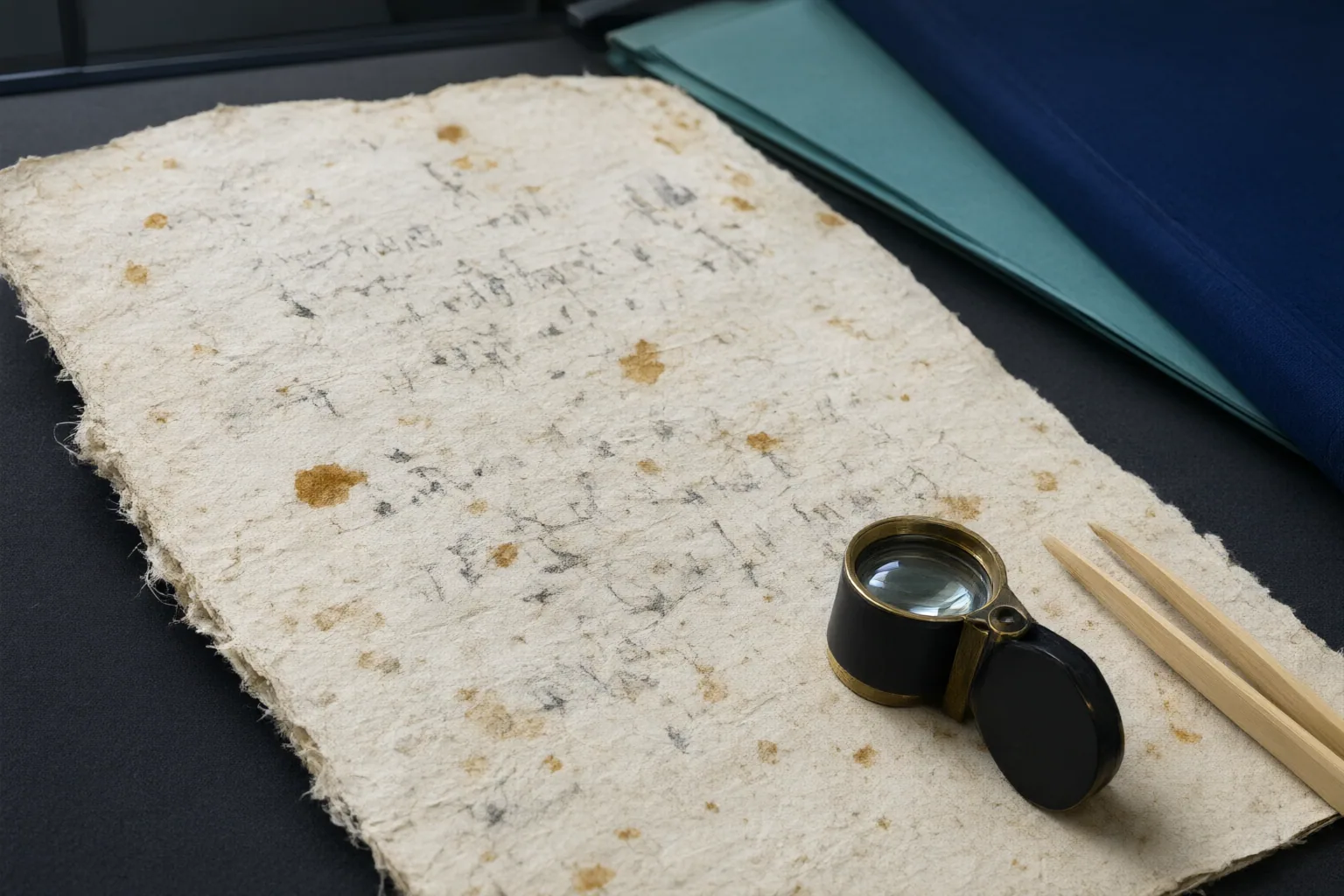
Review the report for recorded changes caused by aging, accidental damage, infestation, unsuitable storage or display, improper handling or packaging, and restoration treatment. A useful record should separate observed condition from known past interventions and indicate whether a problem appears ongoing.
Pay particular attention to fungal or insect infestation and other hazards that could create continuing care obligations. Before acquisition, these disclosures can help a buyer decide whether suitable care can be provided and whether further assessment is warranted. Treatment history also supplies context: without it, the buyer may struggle to understand how the object’s physical state has changed or which areas have already received attention.
These details can materially affect the practical decision to acquire and care for an object. However, the supplied evidence contains no antique-document sale records, prices, market benchmarks, or quantified relationships between individual defects and monetary value. Do not turn a condition observation into a price adjustment without additional, document-specific evidence.
Assess Handling, Storage, Display, and Stabilization Needs
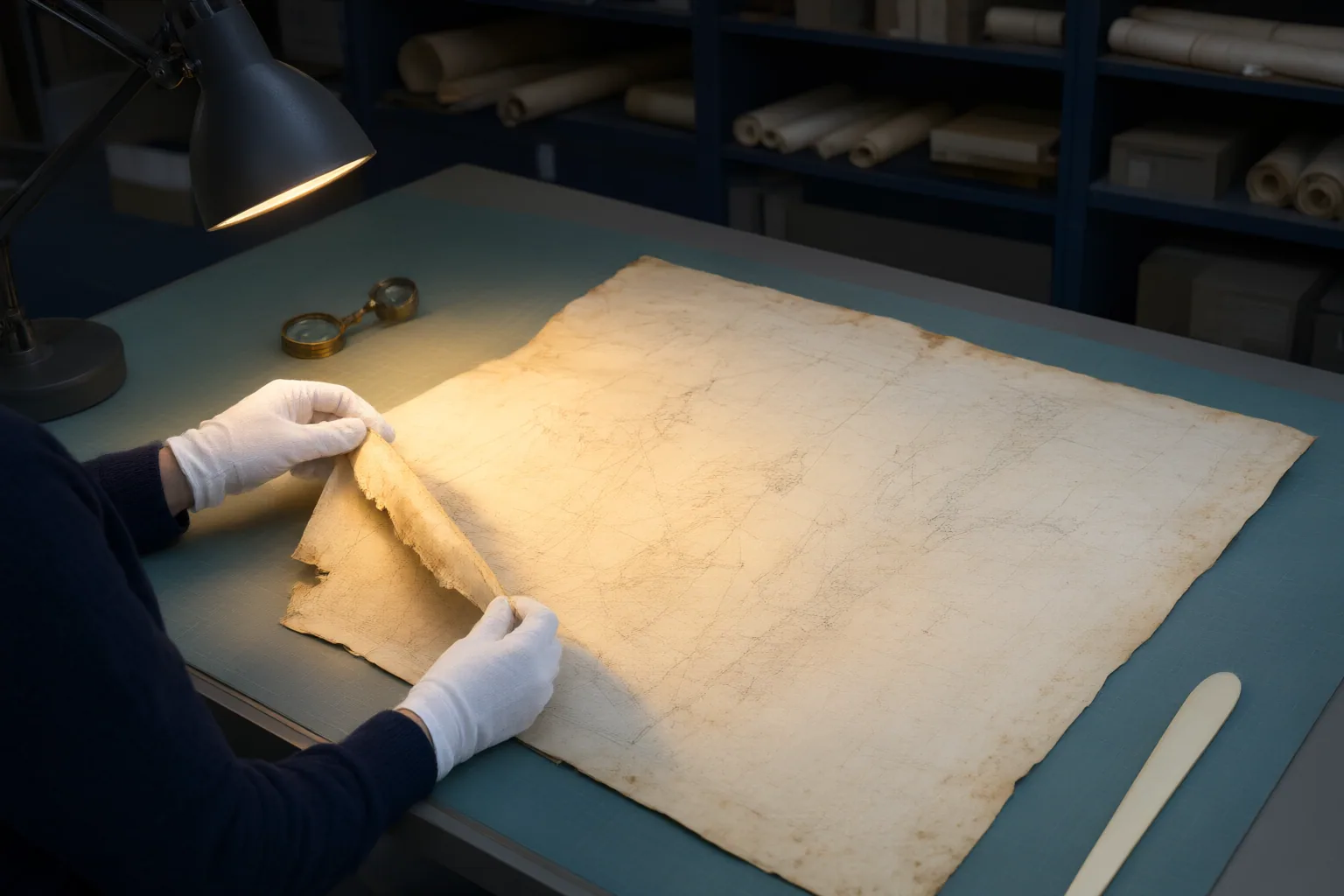
A condition report should identify restrictions or requirements for movement, packing, handling, storage, display, and travel. These instructions reveal what responsible custody may involve after purchase. Omissions can leave a prospective buyer unable to anticipate practical preservation needs.
Check whether the report recommends stabilization or restoration and whether it describes conditions needed to prevent further change. Compare those requirements with the environment, handling practices, and resources available to you. If the object cannot be moved, stored, or displayed under suitable conditions, that limitation belongs in the acquisition decision even though the sources do not assign it a dollar amount.
Well-maintained documentation may also support later insurance claims and, in some circumstances, forensic investigations. Preserve the dated report and its images as part of the object’s ongoing records rather than treating them as disposable sales material.
Conclusion
Use the report as a structured decision aid: verify its date, authority, and purpose; compare the written findings with the visual record; identify damage, active risks, and past treatment; and clarify all handling and care requirements. Remember that the available sources support these preservation and acquisition checks but do not quantify effects on antique-document prices.
Before purchasing, request any missing images, treatment records, risk disclosures, or storage instructions. If important details remain unclear, obtain qualified, document-specific advice before deciding to buy.
Disclosures and limitations
- This article was prepared with AI assistance using only the two supplied conservation sources. Those sources concern artworks and paintings rather than antique documents specifically, and they do not establish monetary effects or market valuations for antique documents.
- No products, sellers, or affiliate offers are recommended in this article. Readers should independently assess any commercial relationship when seeking appraisal, conservation, or purchasing services.