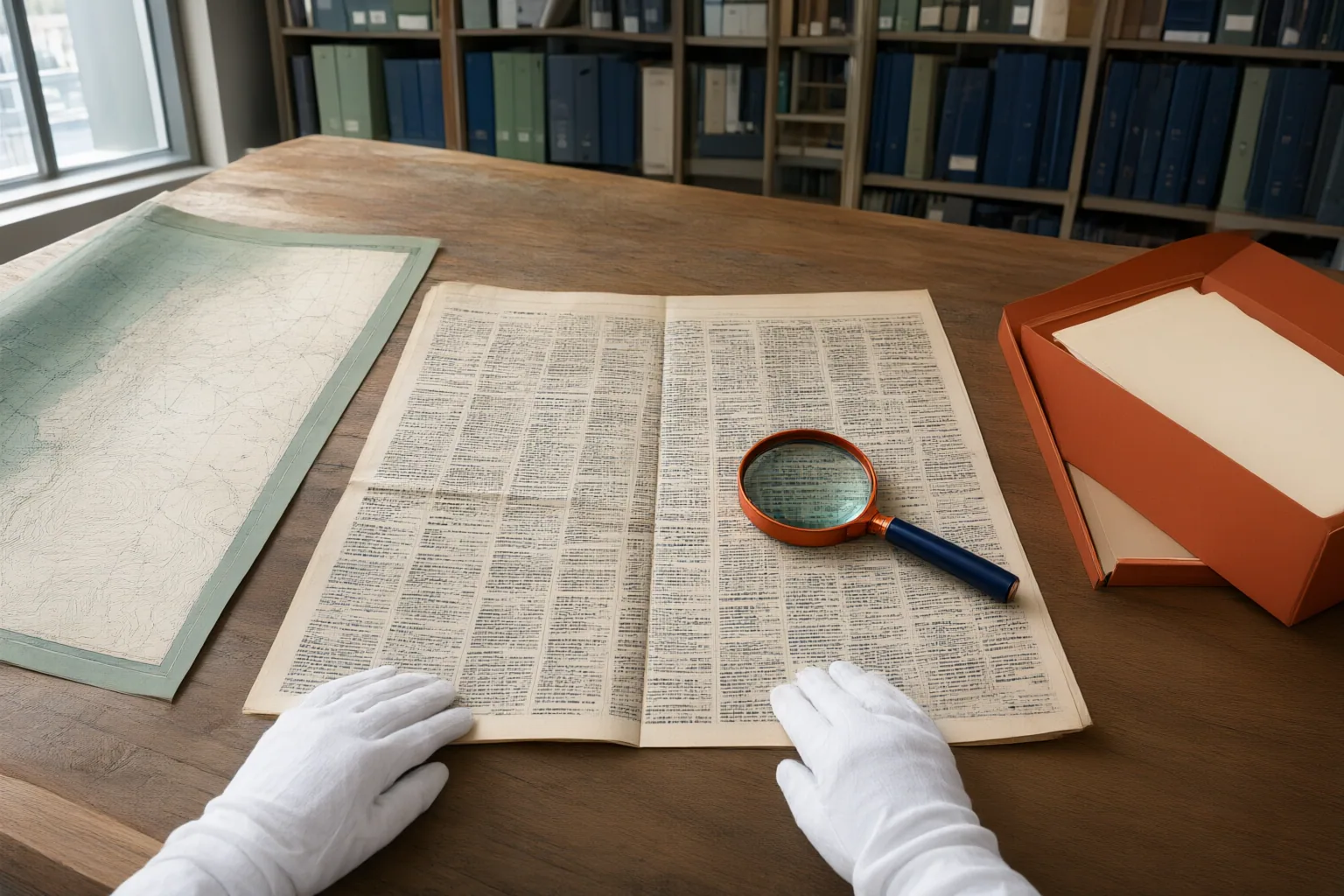
Historical newspapers mix reporting with editorials, advertisements, creative work, statistics, sensational material, and gossip. To evaluate a passage, identify its type and purpose, restore its page context, consider the publication’s perspective, and compare important claims with other sources.
Start by Identifying the Type of Newspaper Content
Begin by asking what kind of material you are reading. Historical newspaper collections can include first-hand reports, essays, editorials, poetry, prose, advertisements, vital statistics, and market information within the same publication. These forms serve different purposes, so their presence on a newspaper page does not automatically make every statement factual reporting.
Examine the passage’s heading, section, neighboring content, and apparent function. Determine whether it is presenting an event, advancing an argument, promoting something, recording statistics, or offering creative material. Digitized newspaper data may explicitly separate articles, sections, and advertisements, reinforcing that a page is a collection of distinct components. Classification is therefore a useful first step, but it does not by itself establish whether an individual claim is accurate.
Look for Signs of Opinion, Promotion, Sensation, and Rumor
Do not presume that an item is neutral or verified merely because it appeared in a news publication. The supplied historical overview describes early published news as highly selective and often propagandistic. It also notes that sensational accounts circulated in early news and that correspondence associated with the Fugger network included business information, sensational material, and gossip. Both fiction and fact were significant in early news publications.
Read for purpose as well as subject. An editorial judgment or persuasive passage should be distinguished from a report; an advertisement belongs to a promotional category; and gossip or sensational material warrants particular caution. Selective coverage can also shape what readers see by emphasizing some information while omitting other perspectives. These clues affect a passage’s evidentiary value, but none provides a complete test of truth or falsehood.
Restore the Page Context That Search and OCR Can Hide
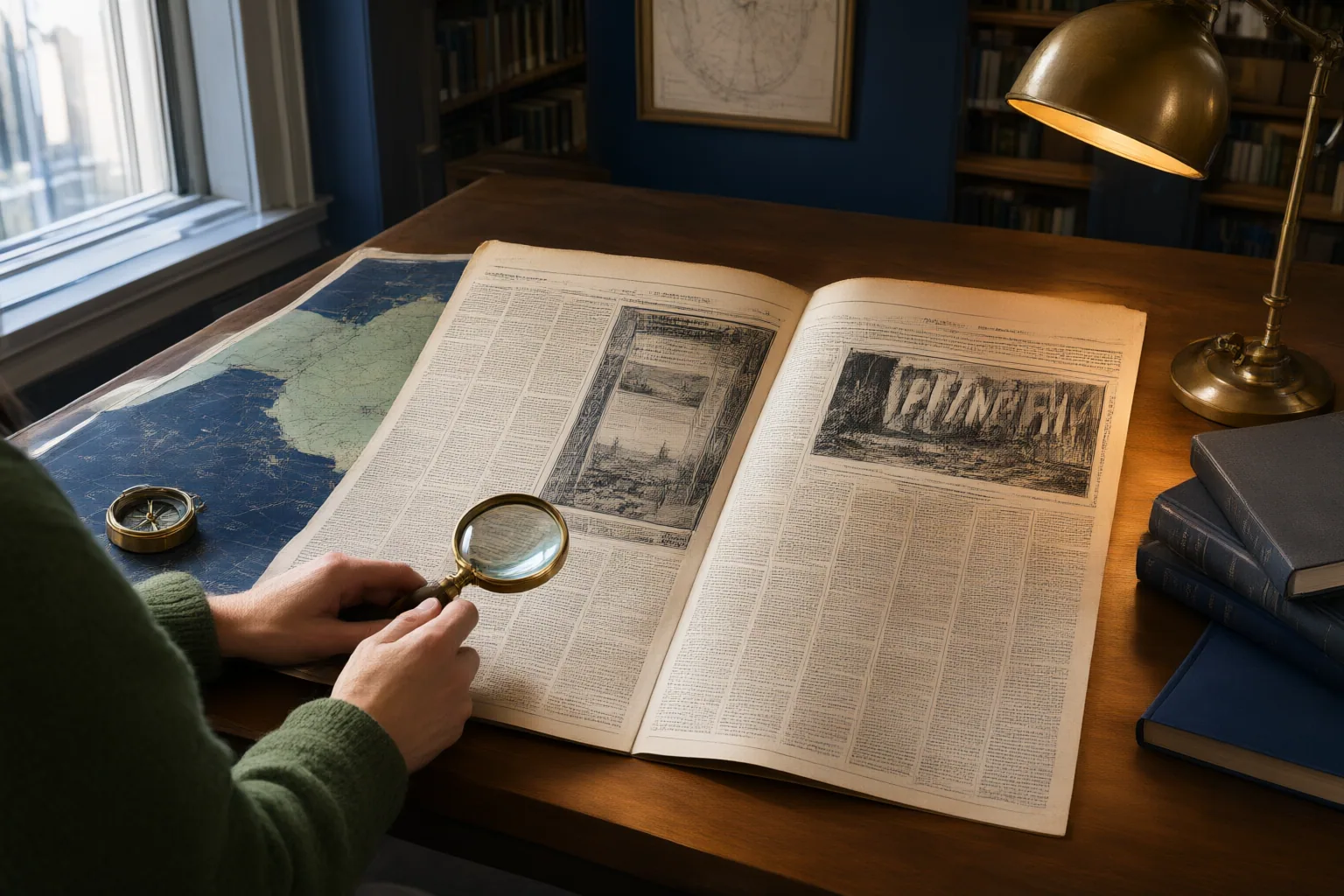
A searchable OCR result may separate words from the visual setting that helps explain them. Open the full scanned page when possible, then inspect titles, subtitles, captions, surrounding items, page position, and section boundaries. This context can reveal whether a search result belongs to an article, advertisement, or another component.
Digitization systems preserve some of this structural evidence. METS can describe a newspaper’s physical and logical structure, while ALTO stores OCR results together with the coordinates of words on the page. Processed newspaper data may also distinguish articles, sections, advertisements, and paragraphs. In the described collection, pages are fully represented in ALTO text, and titles, subtitles, and captions receive manual correction for improved quality. Even so, readers should consult the page image rather than treating an isolated search result as self-explanatory.
Conclusion
Use a repeatable sequence: classify the content, consider its purpose and language, inspect the complete page, and identify the publication’s likely community and audience. Historical collections represent different communities, regions, periods, publication styles, audiences, and perspectives, so one newspaper or collection should not automatically stand for the broader press.
Next, distinguish documented content from interpretation and compare consequential claims with additional relevant sources. Page structure, labels, publication perspective, sensationalism, and gossip are valuable contextual clues, but they cannot verify every individual statement. Choose one newspaper passage now, inspect its full page and surrounding labels, identify its likely genre and audience, and compare its claim with other relevant sources before relying on it.
Disclosures and limitations
- This article was prepared with AI assistance and is based only on the supplied research sources. Its interpretive guidance preserves the sources’ stated limits and does not represent personal testing or firsthand research.
Related reading
Sources
- History of newspaper publishing – Wikipedia — en.wikipedia.org
- Guides: Newspaper and News Sources: Historical news sources — guides.library.stanford.edu
- Historical Newspapers – BnL Open Data — data.bnl.lu