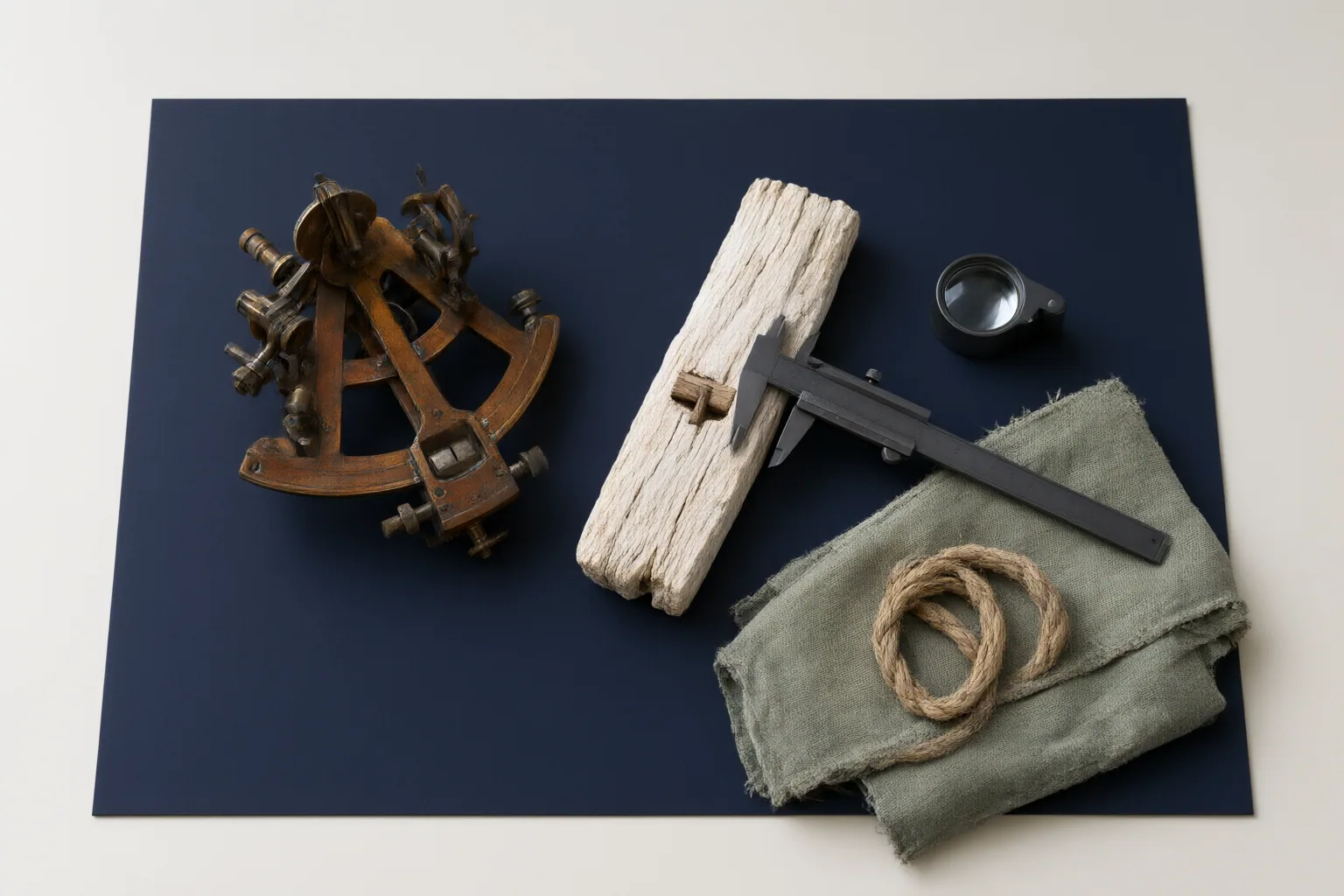
To identify reproductions, evaluate each listing claim separately and compare it with the object’s construction, materials, condition, documentation, and provenance. A later-made object can be legitimate when its date, maker, purpose, and relationship to an original are accurately disclosed.
Separate the Seller’s Claims Before Judging the Object
Do not reduce the decision to whether an object is simply “authentic” or “fake.” List the seller’s claims about maker, date, issue, originality, completeness, attribution, provenance, and historical association, then assess each claim independently. A replica, facsimile, reissue, replacement, reconstruction, or commemorative edition may be a legitimate collectible or reference object when its later manufacture and purpose are clearly described.
This approach also exposes descriptions that blur fundamentally different conditions. An object may be a later production, a restored original, a composite assembled from mixed components, or an item carrying an unsupported attribution. Genuine old parts do not prove that the entire object retains its claimed date, configuration, rarity, or association. Ask the seller to clarify ambiguous language and determine exactly which assertions the available evidence is expected to support.
Check Construction and Materials, Not Just Marks
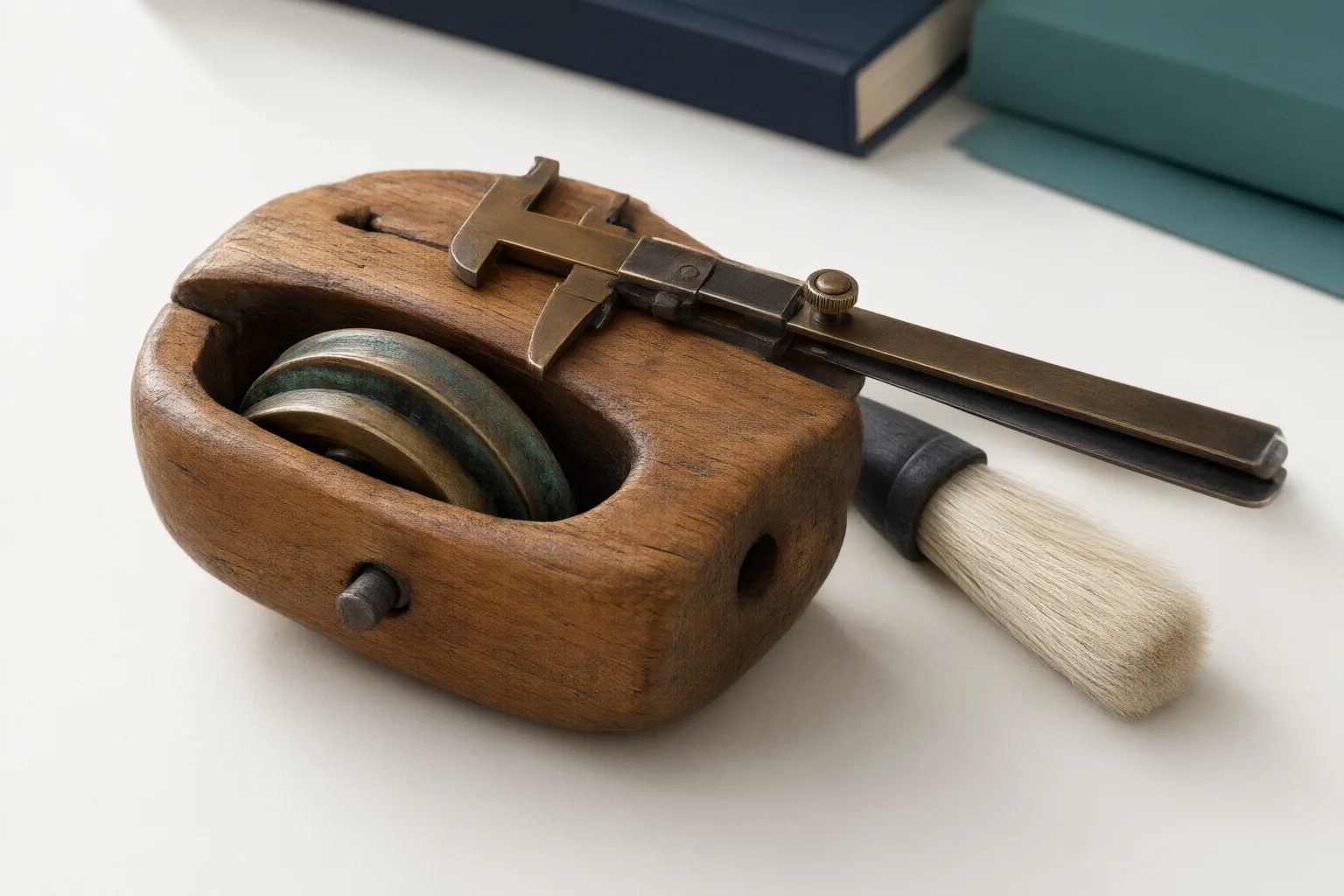
Treat maker’s marks, labels, certificates, and visual impressions as parts of the evidence rather than final answers. Compare manufacturing methods, materials, surfaces, wear, joins, and relationships between components. These features should collectively support the listing’s proposed chronology. Contradictions deserve further investigation, especially when a mark suggests one date while construction or materials suggest another.
Category-specific inspection is important. For ceramics, examine the paste, glaze, decoration, and foot rim instead of relying on a copied maker’s mark. For furniture, inspect joinery, drawer interiors, secondary woods, wood shrinkage, and fasteners. Avoid making a conclusion from one isolated feature: a later screw by itself does not necessarily redefine an entire piece, just as an apparently convincing mark cannot establish the age of a ceramic object.
High-quality reproduction and artificial aging may make visual inspection inconclusive. When the physical clues do not align, compare the object with well-documented category examples or seek appropriate specialist review or testing.
Preserve the Listing and Test Its Chronology
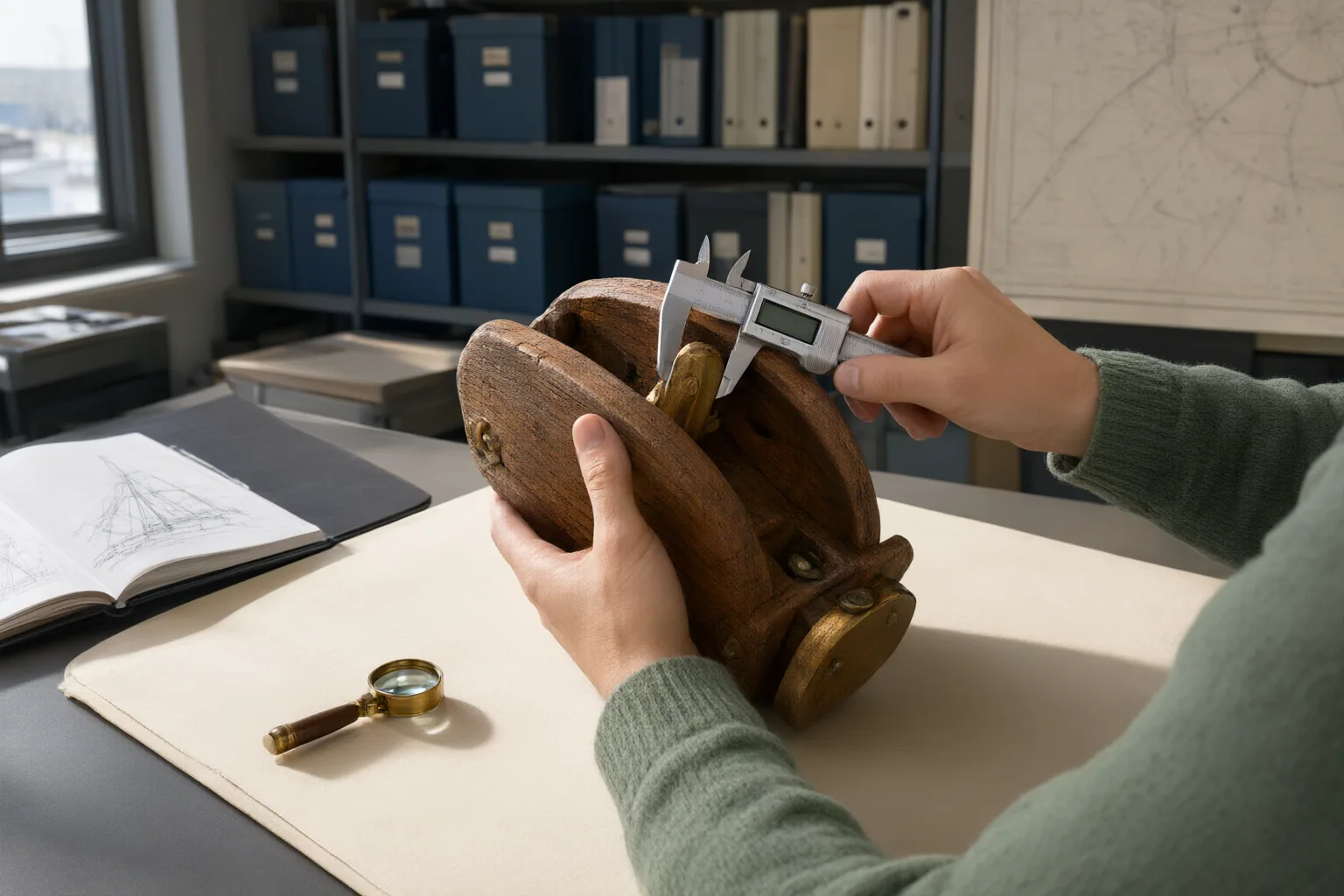
Before cleaning, disassembly, or testing, save the listing’s description and photographs. Make your own record of marks, packaging, labels, surfaces, joins, components, and accompanying paperwork. Preserving this starting evidence helps prevent later uncertainty about what the seller represented and how the object appeared before intervention.
Next, build a chronology from both physical and documentary evidence. Check whether manufacture, wear, component relationships, labels, certificates, provenance, and seller statements tell a consistent story. A later replica can lose modern packaging or identifying marks, acquire artificial wear, and be placed beside unrelated period paperwork. That combination may look coherent without establishing the claimed history. Likewise, authentic older components may have been combined with replacements or reproduced parts.
Record contradictions instead of explaining them away. Documentation should connect convincingly to the object, while physical features should fit the proposed date and sequence of use, alteration, or repair. If the chronology remains inconsistent, treat the relevant claims as unresolved.
Conclusion
State findings in precise categories: what appears secure, what is later, what has been altered, what is falsely associated, and what remains uncertain. This is more useful than applying a single label to an object whose parts or history may differ.
Screening clues are not universal proof, particularly when restoration or replacement components are involved. Save the listing and its photographs, compare every major claim with category-specific physical and documentary evidence, and obtain specialist review or testing when visual inspection and provenance research leave important contradictions unresolved.
Disclosures and limitations
- This article was prepared with AI assistance using only the supplied research package and its identified sources. It does not report personal inspection or testing.
- No product recommendations or affiliate links are included. Buyers should independently verify unresolved claims and obtain category-specific review when appropriate.
Related reading
Sources
- Reproductions, Copies & Fakes — Collectaneum
- Antique Reproductions: How to Spot a Fake and What It's Actually Worth — Valuable Antique Detector